mercredi 24 juillet 2024

A LITTLE RAY OF HOPE IN THE USA. VIVA KAMALA HARRIS

Today has been a quiet, compassionate day in this part of the USA. Received notes from other parts of the USA that a sense of euphoria and an old fashioned optimism for which americans were famous for, was coming back. Reason? The near anointment of Kamala Harris as the next Democratic contender for the President of the USA.

I have never seen a change in the country’s mood in such a short period of time, less than 48 hours and it was felt everywhere. The considerate nature which was natural for americans put in a guest appearance it seems, as I was talking to a clerk at the Tyre Store , who was genuinely american friendly without being flamboyant.

Something has changed, hope it persists and hope Kamala carries this enthusiasm and a sense of coming together (rather than the divide and rule tactic of the conservatives) until the days of elections in less than four months, and make america proud of electing a Black American lady as the president of the USA

It is an exciting thought..


Currently, Barbados is the only republic in the world where both the serving head of state and head of government are women. Honduras, the Marshall Islands, Peru, and Tanzania are republics where the female President is the combined head of state and government.

Hilda Heine. Marshall Islands 
Mia Mottley, Barbados 
Samia Suluhu Hassan from Zanzibar, Tanzania
Xiomara Castro, Honduras 


Dina Boluarte, Peru 


WHAT HAS HAPPENED TO COMPASSION IN THIS WORLD WHETHER USA OR IRAN OR CUBA OR SUDAN OR YEMEN OR BANGLADESH ETC

This land used to be the city and dwelling place of compassionate companions. When did compassion come to its end? What has happened to all the rulers of the land?

This was written by Hafez of Shiraz, poem number 169, lamenting the lack of friendship, companionship, and compassion in his land nearly 700 years ago in Persia. I listened to Shajarian the Elder reciting it on a YouTube video, which is truly beautiful. The video is well done, featuring the incomparable voice of Mohammad Reza Shajarian and the eternal words of Hafez. Just gorgeous.

One thing led to another. It made me think of the social scientist Robert Putnam, whose interview was published in The New York Times on 20th July 2024. I share his anguish and his prediction as a social scientist, which has come true—what has happened to the United States of America.

I was a teenager, traveling from Sweden to my home in Australia, and stopped over in New York. I couldn’t get over the energy, enthusiasm, friendliness, optimism, and trust that exuded from the USA at that time, which made me an instant fan of the country.

But what has happened?

Right now, it is so divided, misinformed, with people following like lambs to the slaughter, and an anti-intellectual atmosphere. Racism, sexism, and fear of the other—it is as if their civilization is going backward.

I am glad I was able to read the transcript of the interview with the social scientist Robert Putnam, who is an expert on social capital (both bonding and bridging capital). Please read about him: bonding is with similar people who share your culture, educational background, and intellectual curiosity, while bridging capital is when your ties are with people who are unlike yourself.

From the gilded age in the 1960s when the USA was more socially equal than Sweden, it has descended into division, polarization, loneliness, and a lack of friendship and community—the very same thing Hafez wrote about 700 years ago.

Thinking about this in countries I am fond of—the polarization in the USA, the economic meltdown in Cuba, the physical and emotional oppression of women in Iran, the barbaric treatment of minorities in Burma—I realize that this is a phase. There is a good chance that each of these countries could swing back to the glory that existed before revolutions and social calamities took place.

Let us hope so.

lundi 22 juillet 2024

we need more social capital in all the countries .. life goes forward and not backwards

This land used to be the city and dwelling place of compassionate companions. When did compassion come to its end? What has happened to all the rulers of the land?


This was written by Hafez of Shiraz, poem number 169, lamenting the lack of friendship, companionship, and compassion in his land nearly 700 years ago in Persia. I listened to Shajarian the Elder reciting it on a YouTube video, which is truly beautiful. The video is well done, featuring the incomparable voice of Mohammad Reza Shajarian and the eternal words of Hafez. Just gorgeous.


One thing led to another. It made me think of the social scientist Robert Putnam, whose interview was published in The New York Times on 20th July 2024. I share his anguish and his prediction as a social scientist, which has come true—what has happened to the United States of America.


I was a teenager, traveling from Sweden to my home in Australia, and stopped over in New York. I couldn’t get over the energy, enthusiasm, friendliness, optimism, and trust that exuded from the USA at that time, which made me an instant fan of the country.


But what has happened?


Right now, it is so divided, misinformed, with people following like lambs to the slaughter, and an anti-intellectual atmosphere. Racism, sexism, and fear of the other—it is as if their civilization is going backward.


I am glad I was able to read the transcript of the interview with the social scientist Robert Putnam, who is an expert on social capital (both bonding and bridging capital). Please read about him: bonding is with similar people who share your culture, educational background, and intellectual curiosity, while bridging capital is when your ties are with people who are unlike yourself.


From the gilded age in the 1960s when the USA was more socially equal than Sweden, it has descended into division, polarization, loneliness, and a lack of friendship and community—the very same thing Hafez wrote about 700 years ago.


Thinking about this in countries I am fond of—the polarization in the USA, the economic meltdown in Cuba, the physical and emotional oppression of women in Iran, the barbaric treatment of minorities in Burma—I realize that this is a phase. There is a good chance that each of these countries could swing back to the glory that existed before revolutions and social calamities took place.


Let us hope so.

vendredi 19 juillet 2024

GRACIAS MI HERMANO FELIX DE MERIDA YUCATAN

Fernando Pessoa, the great Portuguese writer well known for his personal insecurities, once wrote: “If one of the faces that I pass daily on the streets disappear, I feel sad, yet they mean nothing to me, other than being a symbol of all life.”

For me, a great pleasure is being able to recognize faces in faraway places. Whether entering a hotel, a restaurant, or a common space, nothing gives me greater joy than greeting the receptionist by name at the DoubleTree in Kuala Lumpur (12 time zones away from my usual residence), the AVIS rent-a-car counter at Omaha Airport, or the waitress with the sonorous name Ochun at La Burrito Habanera along the Rampa across from the Riviera cinema in La Habana. I also enjoy finding familiar faces along the streets of Palermo in Buenos Aires.

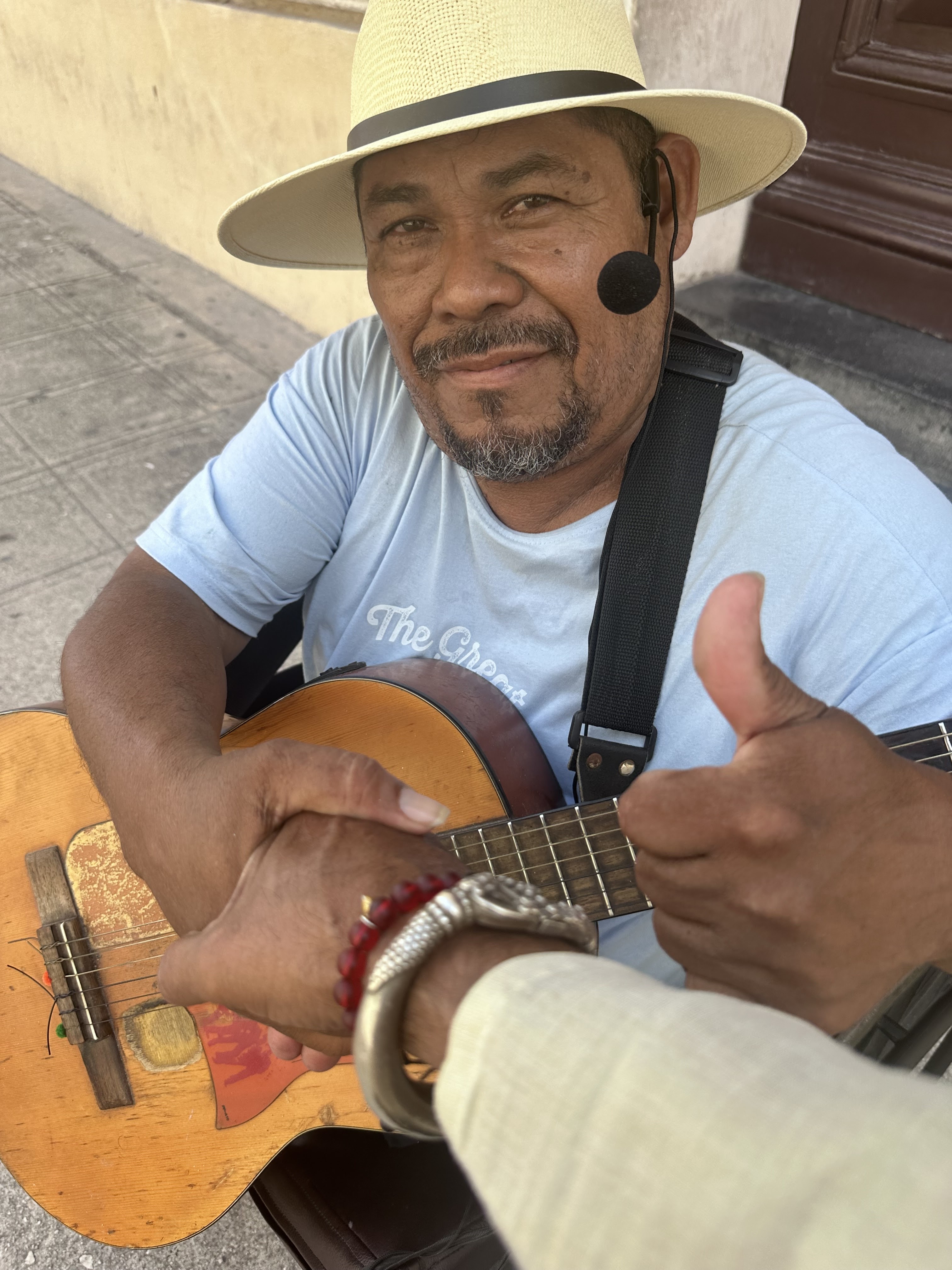
Felix, the legless crooner who sits in front of the now-closed Teatro Contreras Peon, where the first Congress of Feminists was held in 1916, is one such person in Mérida, Yucatán, Mexico. Each time I pass him, he calls out "Dear Brother" and continues crooning. This morning was no different. I usually put a small coin in the hat he has in front of his wheelchair. As I was leaving, he called me back and said, "Dear Brother, this bracelet of mine I will give to you so that when you are far away, you will remember me." I was deeply touched by this gesture. It came at the right time, as these things happen in the symbolism of life.

I am going to Miami from here and plan to spend the next three weeks working with the indigenous people of Florida. I was not looking forward to the narrow-minded polemic discourse taking shape in that country. With just one simple gesture, Felix changed all that. Why am I complaining, flying around the world, dining on the best cuisine, and chatting with intellectual Iranian and other friends about poetry and songs? I wrote to my indigenous friends: I am looking forward to returning to you next week.

Gracias, mi hermano Felix.


HUEVOS MOTULEÑOS AND ITS LEVANTINE CONNECTION ?

Huevos Motuleños: A Culinary Fusion with Middle Eastern Roots


Huevos motuleños, a vibrant and flavorful Yucatecan dish, is a testament to the rich tapestry of cultural influences that have shaped Mexican cuisine. Traditionally, this dish features a tortilla topped with black beans, fried eggs, a tomato-based sauce, peas, ham, plantains, and cheese. While it is celebrated as a quintessential Mexican breakfast, its origins may reveal a fascinating connection to Middle Eastern culinary traditions.


The Yucatan Peninsula, known for its unique and diverse gastronomy, has a history of cultural exchanges due to its strategic location and historical trade routes. One compelling theory suggests that the Arab influence, brought by Spanish settlers who had centuries of interaction with the Moors, played a significant role in the creation of huevos motuleños.


Several ingredients and cooking techniques used in huevos motuleños bear a resemblance to Middle Eastern cuisine. The use of eggs, beans, and tomato-based sauces is common in many Middle Eastern dishes. For instance, the combination of eggs and tomatoes is reminiscent of the popular Middle Eastern dish shakshuka. Additionally, the inclusion of plantains and peas in huevos motuleños mirrors the use of similar ingredients in various Middle Eastern and Mediterranean recipes.


Moreover, the concept of layering ingredients on a flatbread or tortilla can be traced back to the culinary practices of the Middle East. The Arab tradition of serving meals on flatbreads, such as pita or laffa, might have influenced the Yucatecan method of assembling huevos motuleños on a tortilla.


As we savor the delicious and hearty huevos motuleños, it's intriguing to consider the possible Middle Eastern origins that contribute to its unique flavor profile. This dish not only represents the fusion of indigenous and Spanish culinary elements but also highlights the broader global influences that have enriched Mexican cuisine over the centuries.


In conclusion, huevos motuleños is more than just a beloved Yucatecan breakfast. It is a culinary mosaic that reflects the complex history and diverse cultural exchanges that have shaped the food we enjoy today. The potential Middle Eastern roots of this dish add another layer of depth to its already fascinating story, making each bite a delicious journey through time and tradition.


dimanche 14 juillet 2024

HOW ARTIFICIAL INTELLIGENCE EDITED MY WRITING AND ADDED TO THE MAGIC OF WRITING ABOUT BARACOA

Dr. Yehuda Kovesh leaned against the worn wooden railing of his clinic's veranda, staring out at the bustling streets of the coastal town of Baracoa. The salty breeze carried whispers of stories from the sea, mingling with the aroma of brewing coffee from the nearby café. For Yehuda, each dawn brought a new tide of patients and mysteries, but today, his thoughts were elsewhere.

He was renowned in Baracoa not only for his medical expertise but for his unyielding curiosity about life's deeper currents. The shelves of his clinic were lined not only with medical texts but with volumes of philosophy, poetry, and tales of far-off lands. Yet, despite the richness of his intellectual pursuits, Yehuda felt a disquiet gnawing within him—an itch of questions unanswered and paths unexplored.

It was in this state of contemplation that he first noticed the peculiar glow emanating from the old banyan tree at the edge of town. Baracoa was known for its eccentricities, but this was different. The tree seemed to pulse with a soft, ethereal light that flickered like fireflies trapped in amber. Yehuda could not resist its pull.

That evening, as the town slept under a blanket of stars, Yehuda ventured to the tree, his steps guided more by curiosity than caution. The air around the banyan was charged with an otherworldly energy, and Yehuda found himself drawn into its embrace.

Under the canopy, amidst roots that twisted like forgotten memories, Yehuda discovered a hidden alcove—a library, its shelves lined with books bound not in leather but in whispers of wind and sighs of the sea. Each volume held stories of lives touched by magic, of healing beyond the grasp of medicine, and of questions that dared to defy answers.

As he read, Yehuda felt the disquiet within him begin to shift. Here, amidst the pages woven with threads of enchantment, he found echoes of his own journey—a quest not just to heal bodies but to understand the soul's yearning for meaning. In these tales, Yehuda glimpsed the interconnectedness of all things—the pulse of the universe beating beneath the mundane rhythms of daily life.

With each page turned, Yehuda felt himself unraveling, shedding the weight of uncertainty that had burdened him for so long. The banyan tree whispered secrets of existence—of the beauty found in fleeting moments and the wisdom gained from embracing the unknown.

And so, as the first light of dawn kissed the horizon, Yehuda Kovesh emerged from the alcove, his eyes alight with newfound clarity. The disquiet within him had not vanished entirely, but it had transformed into a quiet resolve—a commitment to seek meaning not in answers alone, but in the ceaseless journey of questioning


El Dr. Yehudá Kovesh se apoyaba en la barandilla gastada de la veranda de su clínica, observando las bulliciosas calles del pueblo costero de Baracoa. La brisa salada traía susurros de historias del mar, mezclándose con el aroma del café recién hecho de la cafetería cercana. Para Yehudá, cada amanecer traía una nueva marea de pacientes y misterios, pero hoy, sus pensamientos estaban en otro lugar.

Era conocido en Baracoa no solo por su pericia médica, sino por su incansable curiosidad sobre las corrientes más profundas de la vida. Las estanterías de su clínica estaban llenas no solo de textos médicos, sino de volúmenes de filosofía, poesía y cuentos de tierras lejanas. Sin embargo, a pesar de la riqueza de sus intereses intelectuales, Yehudá sentía una inquietud que lo carcomía: una comezón de preguntas sin respuesta y caminos sin explorar.

Fue en ese estado de contemplación que primero notó el resplandor peculiar que emanaba del viejo árbol de baniano en el borde del pueblo. Baracoa era conocida por sus excentricidades, pero esto era diferente. El árbol parecía palpitar con una luz etérea y suave que parpadeaba como luciérnagas atrapadas en ámbar. Yehudá no pudo resistir su llamado.

Esa tarde, mientras el pueblo dormía bajo un manto de estrellas, Yehudá se aventuró hacia el árbol, sus pasos guiados más por la curiosidad que por la precaución. El aire alrededor del baniano estaba cargado con una energía de otro mundo, y Yehudá se encontró atraído hacia su abrazo.

Bajo el dosel, entre raíces que se retorcían como recuerdos olvidados, Yehudá descubrió un recoveco oculto: una biblioteca, sus estantes llenos de libros encuadernados no en cuero, sino en susurros de viento y suspiros del mar. Cada volumen contenía historias de vidas tocadas por la magia, de sanación más allá del alcance de la medicina, y de preguntas que desafiaban a desafiar respuestas.

Mientras leía, Yehudá sintió cómo la inquietud dentro de él comenzaba a cambiar. Aquí, entre las páginas tejidas con hilos de encantamiento, encontró ecos de su propia jornada: una búsqueda no solo para sanar cuerpos, sino para entender el anhelo del alma por el significado. En estos cuentos, Yehudá vislumbró la interconexión de todas las cosas: el pulso del universo latiendo bajo los ritmos mundanos de la vida diaria.

Con cada página girada, Yehudá se sintió desenredándose, desprendiéndose del peso de la incertidumbre que lo había cargado durante tanto tiempo. El árbol de baniano susurraba secretos de la existencia: la belleza encontrada en momentos fugaces y la sabiduría ganada al abrazar lo desconocido.

Y así, cuando los primeros rayos del amanecer acariciaron el horizonte, Yehudá Kovesh emergió del recoveco, sus ojos iluminados con una claridad recién encontrada. La inquietud dentro de él no había desaparecido por completo, pero se había transformado en una firme resolución: un compromiso de buscar el significado no solo en respuestas, sino en el incesante viaje de la pregunta.


El Dr. Yehudá se preguntaba sobre las fragilidades de las relaciones humanas y su infelicidad. ¿Dónde buscaría él respuestas?

El Dr. Yehudá Kovesh, inmerso en su búsqueda interior sobre las fragilidades de las relaciones humanas y su infelicidad, se embarcó en una exploración que lo llevó más allá de los confines físicos de Baracoa. Decidió buscar respuestas en lugares insólitos: en los relatos ancestrales de los pueblos originarios de la región, en los sueños y visiones que visitaban a sus pacientes durante la noche, y en las sutilezas del mundo natural que rodeaba su clínica. También se sumergió en los escritos de filósofos antiguos y contemporáneos que exploraban la complejidad del alma humana y las interacciones interpersonales. Sin embargo, su búsqueda más profunda lo llevó a explorar dentro de sí mismo, en los recovecos de su propia experiencia y emociones, donde esperaba encontrar respuestas que resonaran con la verdad universal sobre el amor, la conexión y la felicidad verdadera.

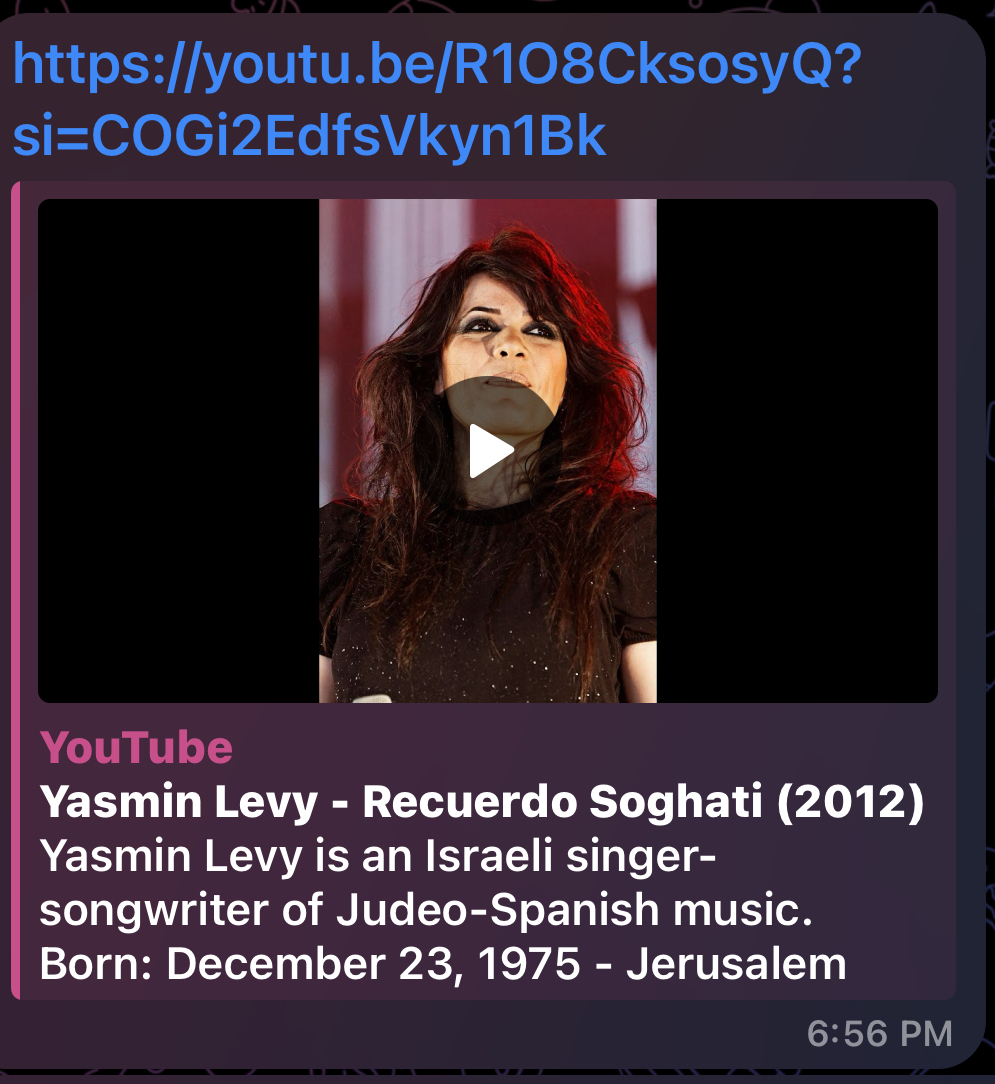
ARDALAN SARAFAZ THE SONG SOUVENIR SOGHATI HAYEDE SHAKILA YASMIN LEVY

On a recent Moment Story, I misattributed a quote to Molana.

When you are coming, the sound of your footsteps comes from all roads

It is not like it's coming from a distant city

But from all of the world


Iran is one of the few countries in the world where a majority of educated people are literate in poetry and culture of that great civilisation. Americans are notoriously ignorant about their culture and history (many people do not even know on whose side Americans fought during the Vietnam war 50 years ago, such short is their memory). I also found Cubans and educated South Americans very literate about their countries and literature, especially poetry. Most educated South and Central Americans can recite Pablo Neruda’s Puedo escribir los versos mas triste este noche.. so can I, because of my travels in their lands.  Well rounded people from India like my friends Abid and Brijesh as well as the Syrian Christians of Cochin are great conversationalists and a pleasure to be with .


It was not long before a note arrived from Tehran. The saying you attribute to Molana is actually penned by a popular song writer Ardalan Sarafaz. Then the name Hayede came up, that illustrious Persian who propagated Persian culture in Los Angeles until her untimely death and the song Soghati Souvenir is associated with her even though there are many versions. I was also  sent a version by Shakila. And I was so gratified when someone in Tehran sent me a link to the Israeli singer Yasmin Levy singing a version of Soghati . Yasmin Levy sings in the language of the Andalusia before the expulsion of Jews from Spain in 1492 in the vernacular Ladino (Judeo-spanish)

Thank you my well educated Iranian friends from Iran. Come to Australia, Come to USA, Come to Canada, their loss is our gain ..


وقتی ميای صدای پات

When you are coming,The sound of your footsteps comes

از همه جاده ها مياد

From all roads

انگار نه از يه شهر دور

Not from a far city

كه از همه دنيا مياد

From whole world

تا وقتی كه در وا می شه

Until the door opens

لحظه ی ديدن می رسه

The hour of union is struck

هر چی كه جاده ست رو زمين

Every single road on Earth

به سينه ی من می رسه

Reaches through my heart


featured posts

QATAR AIRWAYS FROM DOHA TO MIAMI. 15 HOUR PLEASANT FLIGHT. QATAR AIRWAYS IS THE BEST

Miami – 12 July 2026, 6:00 a.m. I flew nonstop from Doha, Qatar, to Miami on Qatar Airways. The flight lasted fifteen hours. I have tra...