dimanche 9 avril 2017

AN EARLY MORNING WALK IN FORT COCHIN

The heat has been relentless,I was told, so I wanted to make the best of the early morning hours by going by to the backwaters/arabian sea confluence this morning.
The first stop was Elite eatery, something which has been there as long I can remember, the grumpy but reasonably friendly owner giving you a reluctant greeting. There is a high turnover of waiting staff at this place, whose customers are mainly Indian tourists visiting this city, with an occasional foreigner thrown in.
Today my waiter was Assamese, he had the oriental features of the North Eastern Indians and he looked distinct from the Nagas who also come down here. He is a from a town one hour away by bus from Gauhati in Assam, it all appeared to me from rather surreal.
Are you from outside, he questioned and his curiosity ending there.
The owner offered me an English newspaper, Keralites are very educated and well informed, I noticed that the owner had two english and two local language newspapers in front of him, not an unusual occurence around here.
One items of great anthropological interest caught my attention.

This topic: non european racism is very seldom discussed but any traveller to India, Malaysia, Japan, Namibia, South Africa, Jamaica among other countries know and can experience this sort of racism. It had been powerless since the populations in questions did not have economic power of discriminations and as things change, non-european racism is raising its ugly head. Move on, man!
My breakfast this morning consisted of Appams with vegetable stew and a milky tea (the cost was 90 INR, less than usd 1.5 with the change of 10 inr handed over to  the smiling assamese).
Then a slow saunter on Princess street on to the Chinese Fishing Nets.
The numbers of these fishing nets are in decline, they have become tourist curiosities rather than livelihood for the local fisherman, who now go out on their outboard boats far into the sea and at this time of the morning, locals gather to buy what is left of the fresh fish.
Chinese Fishing Nets are a reminder of that great Admiral,Zheng He, who made four visits to this port city, long before the europeans knew of the sear route to India.

One of the fishing nets was active this time of the day and it is fascinating to watch the contraption moving up and down like a giant sea monster to bring out the meager catch each time it is dipped into the currents of this merging sea and backwaters.
Pablo Neruda would have found better words of poetry to describe its motion, I had to be content with the sensation of being part of a long drawn history of this ancient port.


Today being Sunday these thoroughfares would be crowded with visitors mostly Indians who wade into the sea fully clothed and a smattering of western visitors visibly uncomfortable in this unforgiving heat.
Even though I have seen the monuments hundreds of times, I wanted to look at them again and remind myself of the history of this interesting nook of the world.
Rescued while embellishing the port of cochin, this remnant of a temple may have housed the Buddhist practitioners when there was a large chinese community by the river banks of Kalvatty. The earliest edifice of the church was also lost in fire and floods and some remnants were found in the bottom of the backwaters.
Walking along the Princess street, with open eyes, one comes across architectural wonders, the cultural combinations of builders over the centuries. For the first time today I saw this decaying old building and once again I saw the walkway from the Koder House towards the Mikvah, which reminded me a bit of the bridge of sighs in Venice.


Past the curious eyes of young Kashmiri adept at seperating a few rupees from the unsuspecting tourists who think of them as locals, past the school and on to the Basilica, busy at all hours of the day, especially today with people carrying with them palm fronds celebrating Palm Sunday.
Old ladies in neat colourful sarees, younger ones in non descript long shirts and trousers and children in european attires were milling around, most of them had a palm frond in hand.
I remember seeing a tablet with an old malayalam script around here and I went in search of it, only to find yet another column, no doubt raised from the bottom of the port, dedicated to the memory of someone or other. Looking closely i could detect many tombstones with obituaries in portugese.

by this time, while still early, sweat was pouring out, i made my way safely to the air conditioned comfort of Niyati Boutique Hotel in Queros street in Fort Cochin!

jeudi 6 avril 2017

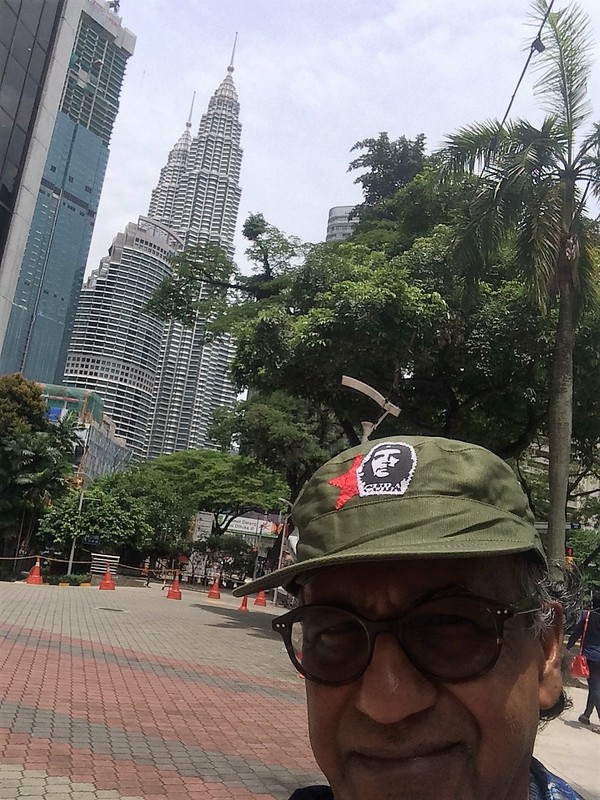
THOUGHTS FROM KUALA LUMPUR WHILE EATING A DOSAI

WHAT GOES THROUGH YOUR MIND WHILE EATING A DOSAI AT KLCC IN KUALA LUMPUR
Levy-Strauss the respected name in the field of Anthropology, French, Jewish and did his field work in Brasil and was professor in various universities and had written a lot about symbolism.
He argued that Symbolism came before language.
Before objects had symbolic meanings, but with the arrival of language, the universe surrounding the humans came to signify things but that does not mean we understood things around us any better.
Immediately I thought of that novel that had influenced me so much while I was still in Australia, trying to learn the meaning of magical realism, only to make it, a purpose in life.
Melquiades always fascinated me, a wandering Gypsy, dressed in clothes that were about to fly off in the wind, with an Asian face but no definite nationality attached to it, who could talk about beri-beri in Jakarta to the cyclones off the coast of Madagascar
Macondo where Aureliano Buendia had decided to make his home, Macondo, is sheer symbolism, especially when you learn about the Latin American history of the invaders and creoles who were born there who did not see eye to eye with the Spaniards
The world was so recent that many things lacked names, and in order to indicate them it was necessary to point them
Here is the first page of One Hundred Years of Solitude. In those sultry nights by the sea wall along Baracoa, Cuba which was our own Macondo, we used to recite the first and last lines of the books by Gabriel Garcia Marquez, Gabo to us in Cuba.
Of course, over the course of the time I have been living among the Omaha, I have understood what Lame Deer talks about Symbolism, how it is so prevalent in the daily life of the Indian.
"We Sioux spend a lot of time thinking about everyday things which in our minds are mixed up with the spiritual. We see in the world around us many symbols that teach us the meaning of life. We have a saying that the white man sees so little, he must see with only one eye. We see a lot that you no longer notice. You could notice if you wanted to, but you are usually too busy. We Indians live in a world of symbols and images where the spiritual and commonplace are one...We try to understand them not with the head but with the heart"
Lame Deer
He also had this to say about Sacrifice and Suffering:
The difference between the white man and us is this: You believe in the redeeming powers of suffering, if this suffering was done by somebody else, far away, two thousand years ago. We believe that it is up to every one of us to help each other, even though the pain of our bodies. ...We do not lay this burden onto our God, nor do we want to miss being face to face with the Spirit Power. ...We want no angel or saint to gain it for us and give it to us second-hand."
Lame Deer, Lakota
I have to give a talk to a gathering of Indians in Anchorage, Alaska in June. I have to explain to people who are not working in the field of health, the symbolism and metaphors present in the world of the Omaha Indians when it comes to illness and suffering and the dysfunction of the body.
As Lame Deer had said, I have to speak with my heart and not with my head.
How can I explain how I learned to assist Omaha in their quest for better health?
It would have been far more difficult had I not studied Medical Anthropology!
1.     Accept the Omaha Indians as Unique, in the way they look at the world
2.     At the same time, reduce this CULTURAL, SOCIAL, HISTORICAL, PSYCHOLOGICAL differences between the Omaha and the observer (doctor, anthropologist or whichever outsider) by living among the Omaha.
3.     Discover the common humanness
My testimony would be of interest not only to the Omaha Indians but to other Indians as well.
The sun is about to set in Kuala Lumpur, Malaysia. People are going to work in the Americas and the people are retiring for the night in Australia. So I am in this magical state, neither asleep nor fully awake but conscious of this entire planet that is moving around the sun.


PEOPLE I MISS MOST THIS TIME AROUND IN KUALA LUMPUR

One sentence from the brasilian movie, Central do Brasil, starring Fernanda Montenegro has stuck in my brain:
Tenho saudades de tudo
I have longings for every thing.
It is quite different for desires, as I found out while strolling towards the South Indian restaurant in search of a dosa near KLCC in Kuala Lumpur this morning.
Shops after shops of latest fashions and I had no desires for them, so their presence is not registered in my mind.
But in the heart, one has longings, for several people and also several places.
But I wanted to pay tribute to three people I thought of, especially in this context. I always think of my close friends in Miami (J/J, M/G) and my Omaha Indian family (A/M/W) and my sweethearts in Cuba.
But this morning, three people stood out in my heart. in the context of being in Kuala Lumpur, after the long flight from Miami.
Few days ago when I was driving to the airport in Havana, at the begining of this journey, there was a poster of Fidel Castro, showing him at five different stages of his life: student leader, revolutionary, Jefe/Comandante, World statesman and the Elderly man of wisdom.
I said to Jorge who was driving me to the airport: Extrano Fidel. I miss Fidel. He shook his head in agreement.
This morning as I was approaching the KLCC in KL, I said to myself, the very same sentences, I miss Fidel. In these turbulent times, we need an International statesman of his stature and his level headedness. 
The last time I was in KL, in November 2016, my brother Eliyahu was with me, I missed very much this morning.
especially he is such a good companion to go out to eat.
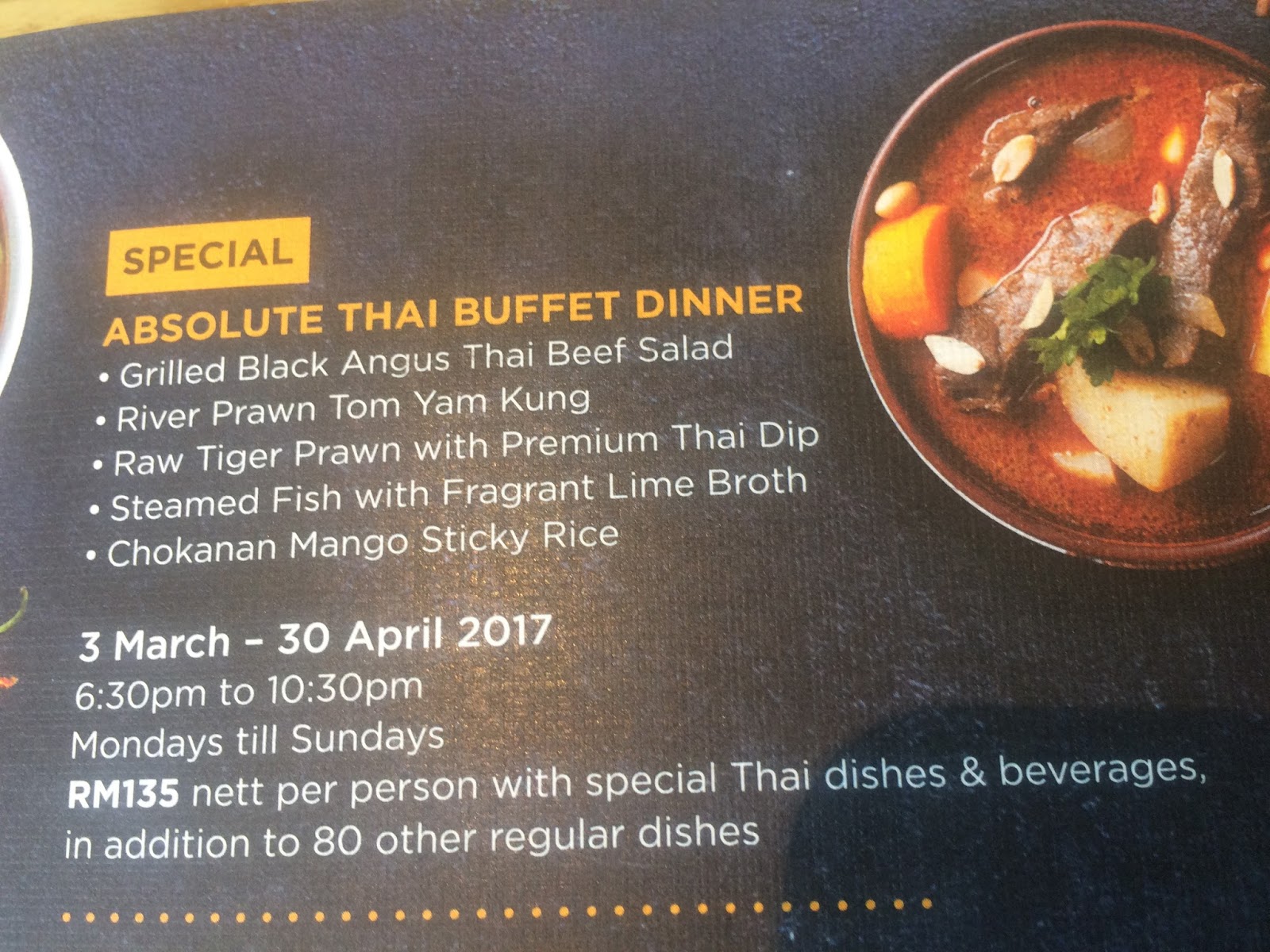
I would be eating at the following feast, if he was here with me.

Another friend/s that I fondly thought of was/were: MGW. I didnt miss them becasue I knew they were lapping it all up on a slow cruise to Europe, on their way to their first stop at Ponta Delgada in Acores. But I want to plan a trip to KL with them, with an added side trip to Siem Reap before the year is out.
,My brother Eliyahu, who was born in Bombay and grew up in Kobe, has soft soft for Dosai, the south Indian delicacy, so I ordered one and sat in silence, reading an excellent book by 
Marc Auge: A sense for the Other. The timelessness and relevance of Anthropology
Who was the third person? to whom I owe such an immense apology. NMH had come twice to meet me here in KL and when we would walk out of this hotel, the clock tower from the British times would always remind me of NMH who embellished my love for Iran. I missed NMH this morning and I can only say: I am glad for those times, of the love in the time of the monsoons and the rains.
Wherever in the world you are, NMH, I wish you happiness and contentment.
Life moves forward, our times together has become memories, some to be forgotten and others difficult to forget, I look forward to other encounters and other passions.

mercredi 5 avril 2017

A WONDERFUL WELCOME TO MALAYSIA

A WONDERFUL WELCOME TO MALAYSIA
I had left Miami early in the morning and with connections arrived at the Singapore International (actually Singapore cannot have domestic flights since it is a very small island) Airport. I had booked a room at the Double Tree by Hilton at Johor Bahru, across the causeway in Malaysia.
It is incredible that very few people at the arrival area of Terminal 3 had any clue about how to get to Johor Bahru. I had come armed with information from the Net and I was surprised that most people, even those who were involved in helping travelers had no clue.
Transtar is supposed to operate a service from SIN terminals to Johor Bahru, the bus I had taken on another occasion (at that time the bus driver did not have change for 50 Singapore dollar note, as the ATM machines dispense only 50 dollar denominations), and I was happy to note that a bus was due to arrive in just 20 minutes after I had arrived at Terminal 3 after the long but comfortable flight (thank you, Qatar Airways). I waited and no bus came and no one could help me, even the pleasant Tamil lady at the Information counter.
Their considerate suggestions were:
Wait another two hours for the next bus, the arrival of which they could not guarantee.
Take 3 local buses to an area where there is a possibility of a taxi returning back to Johor Bahru
Pay an exorbitant amount to a taxi driver to drop me off at the Singapore exit customs which was nearly one hour away, await a bus transfer to the Malaysian customs and then take a taxi to the hotel. And it was nearly 11 pm.
Uber is the app that I use first when I am in a foreign country, why did I forget it and waste the already one hour wasted talking to people who had no clue to help travelers, and this too in the city of Singapore, where I had assumed a more efficient service.
You are in Asia, I told myself, and there is no curiosity here for knowledge for the sake of knowledge and everything is so practicality oriented.
In Cuba we say that we had an Uber like system long before Americans commercialized it and in Israel the socialist variety of Uber had existed long before Uber became popular less than ten years ago.
Within four minutes of ordering on Uber, Ang, a Chinese arrived in his brand new car. I had requested the frontier post of Singapore, hoping to find something there to get me across the border to Johor Bahru.
Ang was my first welcome to Malaysia. I assumed Ang would be Singaporean but I noticed he was a little warmer than the average Singaporean taxi driver, it turned out that he is a Malaysian.
The Great Spirit had blessed me on several occasions by sending me excellent drivers all over the globe and Ang was no exception.
He was happy with the things I was telling him and he said something, a telltale sign of woe of these commercialized times in Asian countries. “It is as if the news does not filter through in Singapore or Malaysia, it is as if we are being spoon fed by the kind of information they want us to know.” He was happy to ask questions about the outside world while telling me about the stark reality of his finances. Malaysia is being run for the benefit of a few people, he continued, the average person has no benefits, and the Malaysian currency is hitting the bottom. He worked very hard in Malaysia and found no ways to get ahead, to earn enough money to buy a house, himself being an ethnic Chinese. So he joined the new globalized revolution, in the micro form here in this border region, he is a Malaysian who lives in Johor Bahru, across the causeway in Malaysia, but has permission to work in Singapore. Uber needs drivers in Singapore for their business and 10 000 of his Malaysian compatriots commute each day, paying nearly 20 usd in toll charges so that they can work as Uber Drivers in Singapore. The income is good, three times as much as he used to make in Johor Bahru in Malaysia and this way he gets to live with his family in Malaysia a country he loves but gets to work in Singapore where the efficient government runs a no nonsense, non-corrupt country. He has the best of the both worlds, I assured him.
He loves working for Uber, chooses his hours and the car he has belonged to Uber but he gets to drive it home to Malaysia every night. Him and 10 000 others like him from Malaysia!


20 years ago an average University graduate in Malaysia started his career with a salary of 1800 MYR (local currency) a month, now it is only 2000 MYR [a1] a month, and in the meantime the buying power of MYR has decreased nearly 300 per cent, so the average salaries have gone forward to become poorer!
Ang and I had a wonderful conversation and he said: I think I will go home after I drop you off at Woodlands Singapore Border control but as you said you were going to Johor Bahru, I will take you to the hotel if you want to continue with me.
I couldn’t believe my luck, the very thought of going up and down the staircases, immigration and waiting for the bus, tackling the dicey taxi drivers of Malaysia all loomed in my mind. I happily accepted his offer and thanked him profusely. Midnight is not the hour you want to be stuck at the border posts between Malaysia and Singapore.
Ang was genuinely a nice person, lost in the puzzle not of his choice, unable to participate to change the economic situation that he finds himself in, a poor victim of globalization.
One advantage of my traveling with Ang across the border was that, the immigration post for cars is where they stop, unlike the bus and pedestrians, who have to climb stairs up to the immigration queues and commotion. He stopped the car, first at the Singapore Immigration and then at Malaysian Immigration and later at Malaysian customs, and each time, the agent behind the counter, all were Malay, were very considerate and not over imposing.
Soon we entered Malaysia and believe it or not, I could feel in the air the tone of welcome. I felt immensely relaxed, leaving behind Singapore and its laws and regulations and efficiency and feeling like I  am going to a laundromat, of course as I told Ang if I were a foreign businessman, Singapore is Shangri La, but for now, I shall indulge myself in the backward, corrupt and verdant and welcoming Malaysia. As the Malaysian Ambassador to Cuba said to me, you do such a good job talking about Malaysia here in Havana and I replied, it is because I am genuinely fond of your country. I briefly thought of adopting Malaysia as part of their programme of welcoming foreigners, but I thought, I have two excellent passports, two other countries where I have places to stay, why add a fifth burden?
With love of a country comes responsibility.
The next day I arrived for my stay at Kuala Lumpur, the capital of Malaysia, at the Double Tree by Hilton hotel and I was humbled by the warmth with which I was received and greeted by everyone, concierge, bellboy, the agents and those at the Executive Club. They see many guests come and go, but I pay attention to their stories and know them by name and enjoy attaching places and events associated with them.
It was a nice Home Coming to Malaysia!


 [a1]

samedi 1 avril 2017

THE MOVEABLE FEAST OF LA HABANA COMES TO MIAMI

Miami has always been a soothing balm to my soul, it was a love at first sight when I arrived in USA to do my post graduate studies. Friends have come and gone but some have stayed and it is their presence that makes this balm even soother. Dr M and his wife GW were in La Habana with me three weeks ago and it is to the memory of our wonderful time there that we had gathered to celebrate, to give thanks to La Habana, Cuba and its special people.
La Habana which is a moveable feast was made even more festive by the presence of my good friends from Miami and also two Omaha Indian friends.
One of the delights of this visit was our dailly ritual at CubaPasion, a sophisticated bar/restaurante run by a Belgian/Cuban couple, he is a journalist and writer and she is a professor of history. It was good to get to know the individuals working there and listen to their stories.
on a tender morning, I left the moveable feast of Havana and made my way to the country of the Omaha Indians. When I arrived there, there was snow on the ground and snow flakes greeted my arrival at the Blue House

The next few days were spent with the Omaha, enjoying their friendship and also participating in a ceremony which brought immense satisfaction and contenment to me.

Having time on your hands, as the village is just that a village where Indians live, ther are no cafe or restaurante or diversion spots, and Indians are usually busy with their private lives 
as a TED MED research scholar I had to devote an entire day to reviews and I was happy to learn about Attribution Theory and its errors. and also read a little bit of the  book, recommended by the sage of sioux city, Steve Avery. While researching for the TED MED, was able to watch very many videos and one of the themes I watched was on Meditation and was able to practise it on myself which brought me an immense inner calm. Meditation for inner self, attribution theory and errors to accept the  others, a lovely combination that brought an inner peace which has lasted to this day.
There had been a funeral in the village, and I participated in the four day long ceremony and had a good understanding of how the Indians dealt with grief and how psychologically sound their approach was. While the body remained in the house, in its casket, relatives gathered together and there would be laughter , sadness, cries and sighs and there would be prayers and singing as well as sharing of the food. Every body pitched in to help, each trying to do their best. On the fourth day the body was taken to the cemetery to be buried and a young child was guided to walk over the fresh earth.

it is said that apart from being a witness to what is happening, Indians learn by observing others, the young child overcomes fears and it is said that he or she would sleep without bad dreams, after this ritual.
The next few days were spent counselling those who came to our Specialty Clinic where we spent hours with people who needed comfort and counsel regarding their illness and its re incorporation into the society they live. It is indeed very satisfactory for a doctor to be part and parcel of a social change as it is unfolding.
Indians have a concept of GIVE AWAY in which people who participate in their ceremonies are given gifts to take home: during this ceremony, the gifts were practical items for the house and also gift baskets of food and personal items.

On my last night at the Blue House, good Indian friends, who had visited me in Habana brought over home cooked meals, this time an atypical meal of MOULES mussels, steamed in butter as well as asparagus which I love, along with rice with eggs as well as Tuna steak. There was also some wine available which complimented the night which ended up in us smoking a Cohiba Robusto.
It felt like family, Omaha indians take relationships seriously and when they bring you into their family, it is with respect and love and there are responsibilities on parts of both of us.
When you spend time with American Indians, you really do not feel that you are in America and the current turmoil in US politics felt as if it was happening in another country. They are OMAHA first and then every thing else, and they follow their ways as best as they can.
For those who has never eaten at a feast of the Indians, here is a sample of the hybrid food that is now seen in the Indian reservations.
Even though I knew that I would be back in the Blue House and with the Omaha within three weeks, I felt the sadness of departure from my Omaha friends.
American Airlines with their food reminded me that I am back in USA and I was happy to reach Miami.


 A warm welcome awaits me at the home of my sister and she makes sure that my genetic cravings for food (I love middle eastern food, as I am descended from them historically)

Cuba is always with me, Cuba goes with me wherever I go, as my friend the Little Poet of Baracoa would say: No need to say good bye, I take you with me in my heart.
A short rest in Miami, to bring into balance, the past and the future travels while enjoying the present fully, but it wouldnt be complete without a reunion with my good friends Dr M and GW..
Lisboa restaurant in Miami
Uber at 7 10 pm to the restaurant and we left the restaurant and 11 pm.. a lovely get together of over 3 1/2 hours, with a genuine comfortable feeling of mutual respect and love. My love for them, is beyond any doubt and I am always grateful for their invitation 


dimanche 26 mars 2017

ADIOS Y BIENVENIDOS CUBA HELLOS AND GOODBYES

Adios y Bienvenidos    CUBA
Hellos and Goodbyes
One of the principles of Yogic Philosophy is the Lack of Attachment: attachment to objects, places and people that binds a person. It is part of Kleishas or structural defects of the mind which can lead to dissatisfaction with life.
Places come and go, as do people. Who would have thought that I would leave Melbourne, Australia, the city of my dreams that I loved so much?  It now features in my distant memory, and holds no bitterness of loss. London is not lost but the longing for it has. Kingston, Jamaica is in the oblivion of my thoughts; Suva, Fiji; Baracoa, Cuba all have fallen from their exalted positions. Miami is a soothing balm, not demanding much, Paris never meant much, Brussels is utilitarian, and Cochin in Kerala is a love with no attachment and I write this from Havana, Cuba which is a moveable feast for me.
Brazilian poet, Cecilia Meireles had written
 DISCURSO
E aqui estou, cantando.
Um poeta é sempre irmão do vento e da água:
deixa seu ritmo por onde passa.
Venho de longe e vou para longe:
mas procurei pelo chão os sinais do meu caminho
e não vi nada, porque as ervas cresceram e as serpentes andaram.
Também procurei no céu a indicação de uma trajetória,
mas houve sempre muitas nuvens.
E suicidaram-se os operários de Babel.
Pois aqui estou, cantando.
Se eu nem sei onde estou,
como posso esperar que algum ouvido me escute?
Ah! Se eu nem sei quem sou,
como posso esperar que venha alguém gostar de mim?

SPEECH
And here I am, singing...
A poet is Always brother to the wind and water;
he leaves his rhythm where he goes.
I am coming from afar and I am going far,
but I have searched the ground for signs of my way
and I have seen nothing, for weeds have grown up and
                                      snakes have moved about.
I have also searched the sky for the pointing of a way,
but there have always been many clouds.
And the workmen of Babel have committed suicide.
So here I am singing...

I do not even know where I am,
how can I expect that any ear should listen to me?

O I do not even know who I am,
how can I expect anyone to love me?
 She had written elsewhere: people come into our lives, some leave no memories but others leave a void that can never be filled. It is also good to remember that in this modern world most of the human interactions are between 5-10 minutes long, whether on the phone with an airline agent or a taxi driver or a waitress or a GP at his surgery, so one good advice is to make the best of these accumulated short interactions. We lament the vacuum created by those loved ones who left us, trying not to fill it, emotionally deprived that happens so seldom. But most leave flimsy memories with no shadows, no nurturing of attachment and their loss is felt only superficially.
Cuba is a place where you can make friends easily, it is also an easy place to say good-byes.
Cuba is a place where you can take your heart to be dry cleaned, a friend of mine used to say. In the general innocence of their minds, it is easy to see cynicism without curiosity (Cubans are just opposite, they are curious without being cynical, a true sign of intelligence), lack of gratefulness and humility, seen often among the westerners (Cubans are both, even for the simplest of things in life).
As such these friends, regardless of their nationality, excuse themselves out of our lives, their presence becomes a memory and memories are there to be forgotten
Remembering the poet, Pablo Neruda
We can forgive with enormous hearts
Those who cannot love us
Sadhguru would encourage us to live with the qualities in others that we do not like

But let us forget them with generosity.

RETIRED MAJOR GENERAL DORON ALMOG AND HIS WISH FOR A MORE TOLERANT SOCIETY THAT INCLUDES DISABLED PEOPLE LIKE HIS FALLEN SON


Doron Almog was awarded the ISRAEL PRIZE the highest civilian honour bestowed upon citizens of Israel.
The story of his life is awe inspiring: an Israeli patriot, special forces soldier, who suffered tragedies of such great proportions! but brought so much hope for disabled people of all races in Israel.
if you have a chance to watch the video, please do so :

https://www.youtube.com/watch?v=Ftnb2fpJ664

Five members of the Almog family from Haifa: Ze'ev Almog, 71, his wife Ruth, 70, their son Moshe, 43, and grandsons Tomer Almog, 9, and Assaf Staier, 11 were killed in the suicide bombing of Maxim restaurant in Haifa on October 4, 2003, while Oren Almog, 10, was grievously injured and blinded.
His brother died fighting the syrians in Golan Heights and his son was given the name of his brother ERAN, with great hopes of courage and patriotism.
But little Eran at the age of 8 months was diagnosed with Autism with severe mental retardation.
What Doron Almog did for the Israeli society and for people like his son, regardless of the race and religion, is amazing. Please watch the youtube video

Here is the prepared introduction when he won the Israel Prize in 2016

Doron Almog Introduction
Ladies and Gentlemen,
Now it’s my privilege to introduce you to a man who exemplifies the strength and sensitivity of an Israeli patriot…
He is an accomplished IDF commander, who led the operational task force in Tripoli in 1973 against the terrorists who murdered Israeli athletes and coaches at the Munich Olympics and led paratroopers during the Lebanon War…
He is a fearless leader of rescue operations, who commanded the first force to land in Entebbe airport and rescue hostages from radical leftist and Palestinian terrorists, and led the elite Israeli Air Force commandos in clandestine missions from 1983-1988 to rescue around 6,000 Jewish Ethiopians from Refugee camps in the Sudan…
And he is a champion of those with special needs. He founded ALEH-Negev, a state-of-the-art rehabilitative center in the Negev, one of Jewish National Fund’s key partners in making Israel more inclusive, which, when complete, will be home to over 200 adults with disabilities and serve 12,000 children and young adults with disabilities each year.
Ladies and Gentlemen, please welcome the 2016 recipient of Israel’s highest honor—the Israel Prize for lifetime achievement, Major General Doron Almog.


featured posts

VIPASSANA MEDITATION : A SORT OF TRAVELOGUE FROM RAPA NUI TO HAVANA TO KUALA LUMPUR TO COCHIN TO MUSCAT, OMAN . THANK YOU

How Vipassana Meditation Entered My Worldview A Personal History Sometimes a teacher enters our life without either of us knowing that...