FROM
INDIANS TO CUBANS
A
FREQUENT FLIER ODYSSEY
At 630
AM, as NPR was broadcasting the news of the day, I drove out of the sleepiness
of the UmonHon Indian village, alongside the Missouri river and some rolling
hills in the North-eastern part of Nebraska. The single main street, as
expected, was deserted. I drove out to the open country, being careful not to
encounter, by accident, any of our four legged brothers. It is their habit to
come out this early as the tender skies are announcing the dawn. It was refreshing
to drive the 100 miles to the airport, the now rising sun colouring the unique
sand hills to the left, the Loess Hills. At the AVIS counter at Omaha Airport,
it felt good to be greeted by the people who are used to seeing me once a
month. Passing quickly through the security procedure, I sat down in the
departure lounge.


I
thought of coffee would be refreshing, ordered a Café Americano with enough
space to put some warm milk into it. I opened my wallet, surprised to find out
that I had but One Dollar in US currency! (Plenty of Euros though) I apologized
to the lady for using a credit card for such a paltry sum. I realized that I
would be arriving at ANC few hours hence with just one dollar in my wallet! (This
happened to me, around this time last year, arriving at HNL with just one
dollar and a broken debit card!)
OMA to
DEN flights always remind me of that flight in which I met Joe from Bogor, who
has to become a good friend, and we have seen each other in various parts of
the world since then.
An
exceedingly obese man sat next to me, a Mainland Chinese, I instructed my mind
not to make any judgement. Observe him, I instructed my mind, as you would
observe a bird in the sky (thank you, Jiddu KM).
At
DEN, the walk to the Club was long and I appreciated the effort on this chilly
morning. To me, flying is still an excitement. I enjoy my day, airports, and
lounges and looking at faces that one never would encounter again.
In the
USA, regional differences exist in the physiognomy of people, observable even
at transient places such as airports. Leaner, lankier, healthier Americans,
mostly white are found at DEN, hardly any Asian, and Black or Latino
passengers. It may be a reflection of Colorado being the healthiest state in
the US!


Sitting
comfortably in seat 4 B on a Boeing 737-900, was a savouring moment.
Why am
I doing this?

Any
subscriber of Flyer Talk would understand. It is November, towards the end of
the year; one has to make sure that the FF status is in order. I needed 8500
miles to bring my United Airlines Frequent Flier status up to par.
Paradoxically I plan to fly them no more; their policies are not in sync with
the interests of the FF. But it is good to have access to Star Alliance Lounges
abroad if one finds oneself in such a predicament, so it may come in handy,
somewhere in the coming year in Asia or Europe, especially if you are flying a
Star Alliance Airlines for some reason or other. I have decided to fly Etihad
Airways, based in Abu Dhabi, it may open up some interesting itineraries. Hope
they start flying to Miami in the near future.
Enjoyed
the meal on board and a light white wine from Gascogne. Chatting a little with
the Flight Attendants, it was nice to know they would be on my flight from
ANC-ORD the next day. Hope you have the same wine, I joked with a welcome
smile.
Flying
in the front of the plane, fellow passenger are not reflective of the
friendliness of the American people. I don't remember ever having an
interesting conversation in any of the flights within the USA. Also people want
to rest or work and on a weekday, it is usually filled with businessmen in
suits with their laptops open. If they are from the islands, one could hope to
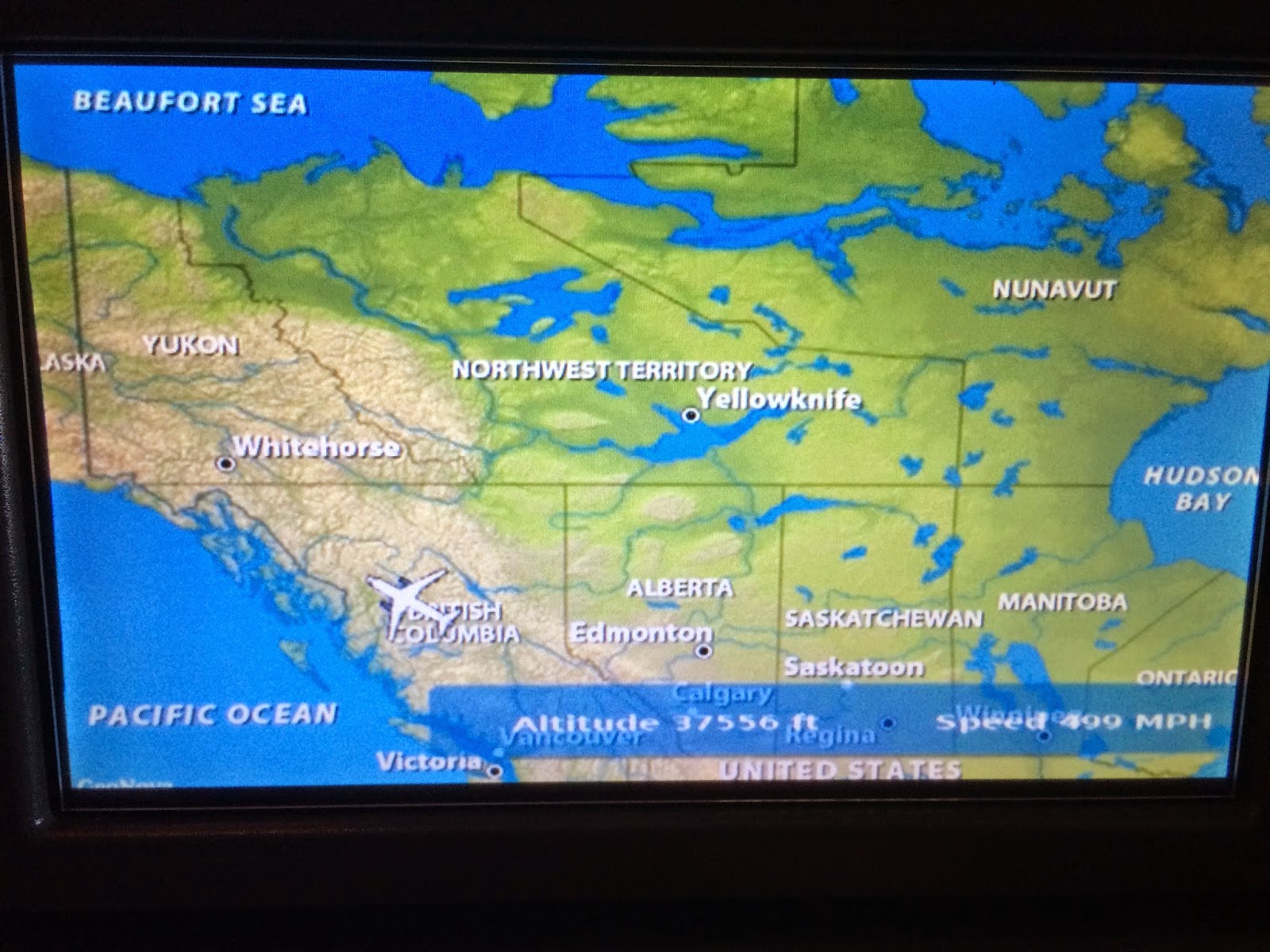
have some nice banter, more so if they are from South America. The DISH TV,
which is the Inflight Entertainment, goes off as soon as you enter the Canadian
Airspace.


A nice
documentary about an Iranian musician Kayhan who lives in Karaj, Iran was shown
on Dish TV. It was good to hear him say: Life is good here for me, I cannot
imagine living abroad any longer. Artists whether Iranian or Cuban, and
especially if so, need the ambience and nourishing air of their countries.
Perhaps that is why Cuban artists or exiles that leave Cuba seldom produce
anything artistic of importance once they are abroad, especially in the USA,
even if their lives are much more materially comfortable.
Next
was Anusheh, a young woman singer from Bangladesh, leading the musical group
Bangla. I don't need Imams or the Koran to tell me how to live. It is in my
heart, she says. Like many Bangladeshis, she is a follower of a mystic, Lalan
Fakir.


Always
nice to see some cultural news from Saharawi (Sahara Arab Republic, a former
Spanish Colony, occupied by Morocco). Cuban doctors have been going there for
years to provide medical help to Saharawi patients. Meriam Hassan, a well known
singer, now living in Spain says: I am happiest when I am home, even though
home here is a refugee camp, my family, my friends are here.
Reminded
me of the poem Exilio by Pablo Neruda and the pain I used to feel for years of
my separation from Australia.
On
arrival at ANC, one could see snow clad mountains very close to the city. The
newness of everything is very obvious, newer even by American Standards! All
the buildings are new. The demography is very interesting here. Lots of Asians,
Chinese, Filipinos, Laotians, Vietnamese and Samoans and other Pacific islands.
Mixed among all of them are the Inuit/Eskimo and American Indian faces. Someone from Lower 48 states could confuse
the oriental faces … in a way I thought, after thousands of years, the original
gene giving away to so many different Asian nationalities, now meet in Alaska
as if it is an ancestral pilgrimage.
This
connection becomes even clearer when you see the Yupik of St Lawrence Island so
close to their relatives in Siberia!
American
Indians have been here very long time, Inuits have had a continuous migration
over the millennia,
Pacific
Islanders left southern China around 4000 yeas ago.
The
aggressive Han pushed down Vietnamese and Laotians from the north.
Nepalese
of the type I met were of Sino Tibetan origin.
So as
the Indians say, Mitakuye Oyasin, we are all related
The
Black American van driver said: race relations are far better here than
anywhere else in America!
A
Tibetan restaurant, vast number of Chinese offering fake Sushi, fakes Thai
food; Salmon is everywhere. You can cover downtown area on foot, it is a small
town. But the bitter winter it must be, the Heritage Museum, Native American
Museum all close for the winter. This is a good time to visit, the temperature
hovering around 30 to 40 degrees F.
People
were exceptionally friendly, in the streets, in the shops; White people are not
the majority here. I spoke Spanish to locals from Panama and Mexico. I am told
there are even some Cubans here! A large Consulate of Mexico in front of the
Anchorage Museum is an indication of the Mexican presence here so far away from
Mexico. That has produced lots of Mexican restaurants. The city is not
distinguishable in any way from any other smaller city of its size in America.
The architecture is postmodern American transient, if there is such a thing!


Vietnamese
Restaurant with its distinct smell served up an average Pho, it was small and
crowded but at least Vietnamese in nature. At lunchtime a Thai Noodle dish was
served at a “Thai restaurant” a fake one, The Thai Garden, which was hardly
edible and nothing to do with Siam! So watch out for pretenders in this new
land.
The
driver who came to pick me up from the Pho restaurant was a Black man, who was
very friendly. I realized that when you are faced with a common enemy, here the
confrontation is with Nature; you are not about to squabble about the colour of
your skin or the slant of your eyes, but try to get along. America in its
newest form, there is no outcry against Immigration here. At Wal-Mart the
workers were recent arrivals from everywhere. Samoa, Hawaii, Mexico,
Philippines. Direct arrivals and not via another state in the Lower 48. The
only thing you did not see were bearded men with suspicious eyes or women
wearing hijabs. While other Asians were in abundance, there was as distinct
absence of Hindus and Pakistanis. But there is a Tibetan Restaurant. Perhaps
this has something to do with the Pacific Rim?
In the
morning at the hotel, chatted with a worker from Panama. Panama es muy linda,
verdad? She reminisced and a Gorakha from Eastern Nepal close to the Bhutan
border talked about his isolated village. For him, the mountain scenery might
look familiar.
I set
out for downtown, courtesy of the Hotel shuttle. The driver of the shuttle was
an Alaskan, that rare breed that is born and bred in Alaska. Funny and as we
chatted it was evident he had an open mind, not like the “born and brought up”
whites of Florida or Singapore Chinese, who cannot stand the incursion of
another culture, another language into their former controlled territories. But
both of them could ask: Did I arrive here a few generations ago?
The
only thing my new Alaskan friend resented was the recent import of Gang Culture
from Los Angeles.


The
Anchorage museum dedicates one floor to the exhibition about the Native peoples
of Alaska-various Inuit groups and an Athabascan Indian group, Denaii, who are
related to the Navajo people from the south. It was good to learn about the
Russian Occupation of Alaska from 1784 onwards, resulting in Russian Orthodox
churches and Russian names carried by some of the Inuits. Yupik were happy to
be reunited with their relatives, as they never had any border. Sugapiaq,
Andangax and people who live in such islands as Pribilof, Adak the town and the
island at the end of the chain of islands hugging the International date line,
were all portrayed very sympathetically and their ways of life and philosophy
explained and some videos shown of their beautiful lives amidst such harsh
natural scenery.
I
learned a lot about the Indigenous cultures of Alaska. Tlingit, Timshian and
Haida and other many sonorous names of Inuit people.
I had
only one pet peeve on this short stop over: Chinese people opening up fake Sushi,
Thai, Korean, Vietnamese shops and make such a poor culinary job of it, an
insult to these delicious cuisines, to add insult to injury, they bring an
arrogant attitude and distinct lack of friendliness. Perhaps it is a social
phenomenon from Asia, coming from a distinct class of people who are not well
educated, I have seen it also in Vietnam. Here stick to ethnic food cooked by
their respective nationalities, avoid Thai Garden, I noticed a nice nouveau
fusion resto Ginger, may be related to the resto of same name in Seattle? The
Tibetan one has been mentioned and I could spot a north Indian resto by the
name of Bengal. But then again who would want to eat Rogan Josh in Alaska? When
there are such good Salmon about, but then again can they make Rogan Josh with
Salmon? I was excited about a Falafel Club run by Israelis but I couldn't
locate it.


Was
able to wait at the Alaskan Airlines Club at the Airport. I thought ANC would
be their hub; no it is Seattle said the pleasant agent in charge. She seemed
knowledgeable about Commercial Aviation and invited me to try Alaskan Airlines.
Alors, it is geographically in another part of the world that I do not
frequent. It is like asking an Alaskan native to become a frequent flier of
Cubana de Aviacion. he he . The bubbly served was horrible, another Fake served
all over America, with a grandiose name as: California Brut Grand Reserve
Champagne UV. It was a harbinger of the food served on the flight ANC-ORD. It
was a hamburger!


A nice
shower at ORD, with a Filipino in attendance, Selamat to him. They are hard
working and they are everywhere. Malaysia Singapore USA Australia Oman Dubai
Doha. Etc.
The
flight ORD-SJU was uneventful. The breakfast served was edible, something was
missing, a touch of sophistication or a genuine interest in the service?


GOOD
BYE, UNITED AIRLINES. You please your shareholders more than you please us the
passengers or your workers. So good-bye.
SJU
reminded me much of HAV. The airport is smaller and provincial than HAV but the
people, the accent, and the warmth
Richer,
PR is very similar to Cuba, I thought, just the people are fatter and more
prosperous.
The
pleasant chubby agent at the Admirals Club, which had good ambience but no
food, no interesting, drinks or magazines (does that reflect the PR culture of
today?) made sure I was accommodated on an earlier flight. The AA 757 aircraft
carried me through the tropical night with its usual tropical nibbling of
turbulence.


Arrival
at MIA was painless, quickly arriving at AVIS, the neuvoyorqican? Alejandra was very helpful, walked with me to
the Preferred desk where inefficient people usually make mistakes deliberately
or not in favour of the company. He corrected the final bill to be paid, and
the girl behind the counter obliged, cutting my bill by 30 per cent. I must
look out for Alejandro the next time, since the computer on my return printed
out a bill ridiculously low for the two-day rental! It is not good to have
people who are not well trained at the helm of renting cars. A beautiful car, good
service, thanks to AVIS, my favoured car rental agency.
Reached
home by 9 pm, having left on an early morning two days ago, with a sojourn in
ANC where I learned a lot about Inuit and the face of New America.
Miles
accumulated, FF status attained, upgraded travel (despite the hamburger on UA
flight) on all legs, amounts to a nice pleasant way to spend a day or two.


